Discover the profound meaning of the Buddhist Wheel of Life, its twelve links of dependent origination, the six realms of existence and the timeless wisdom of Buddhist philosophy in the Himalayan kingdom of Bhutan.
Scroll to explore ↓
Introduction: The Wheel That Explains the Journey of Life
What if a single painting could explain the entire human experience — from birth and happiness to suffering, attachment, ageing and death?
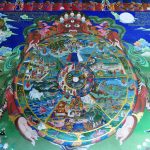
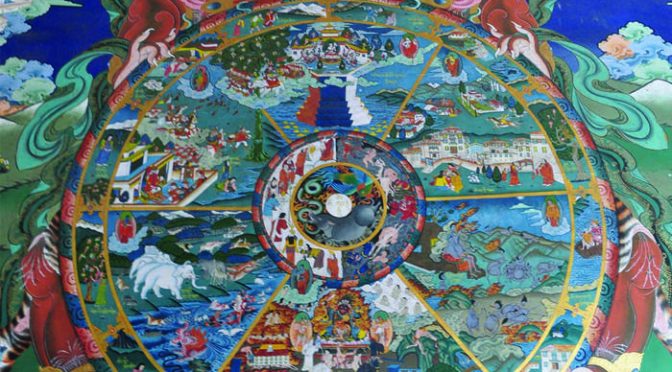
In Buddhist philosophy, one of the most powerful visual teachings is the Wheel of Life, known in Sanskrit as Bhavachakra and in Tibetan as སྲིད་པའི་འཁོར་ལོ་ (Sidpai Khorlo), meaning the Wheel of Existence or Wheel of Becoming.
Found on the walls of Buddhist monasteries and temples throughout the Himalayan region, this remarkable illustration presents a profound understanding of existence. Its intricate circles, symbolic animals, human figures, heavenly beings and scenes of suffering reveal the Buddhist teachings on karma, rebirth and liberation.
In Bhutan, where Vajrayana Buddhism is deeply woven into everyday life, the Wheel of Life offers an especially meaningful way to explore the relationship between spiritual wisdom, human behaviour and the search for inner peace.
For travellers visiting Bhutan, understanding the Bhavachakra opens a fascinating window into the country’s spiritual heritage. It transforms a visit to a monastery or temple from simple sightseeing into an opportunity to reflect on the deeper meaning of Buddhist culture.
1. What Is the Buddhist Wheel of Life?
The Wheel of Life is a traditional Buddhist illustration representing samsara — the continuous cycle of birth, death and rebirth. It explains how living beings remain caught in this cycle through ignorance, attachment, aversion and the consequences of their actions.
The teaching is closely connected with the Buddha’s Four Noble Truths:
- The Truth of Suffering (Dukkha): Ordinary existence involves suffering, dissatisfaction and impermanence.
- The Truth of the Origin of Suffering (Samudaya): Suffering arises through craving, attachment and ignorance.
- The Truth of the Cessation of Suffering (Nirodha): Suffering can cease when its underlying causes are overcome.
- The Truth of the Path (Magga): The Noble Eightfold Path provides a way towards liberation.
These four teachings form the foundation of Buddhist philosophy. The Wheel of Life brings them together in a single visual composition, illustrating how actions and mental habits influence experiences and how beings continue moving through different states of existence.
Its message is not simply that life contains suffering. Rather, it teaches that suffering has causes, that these causes can be understood and that liberation is possible.
2. Yama: The Lord of Death Holding the Wheel
One of the most striking features of the Bhavachakra is the enormous figure holding the entire wheel in its claws. This figure is generally identified as Yama, the Lord of Death.
His fierce appearance represents the impermanent nature of worldly existence. Everything within the wheel — wealth, beauty, power, happiness, physical life and even heavenly pleasures — is subject to change. No being can remain permanently within any realm of samsara.
Yama therefore reminds viewers that worldly existence is temporary. Even the most fortunate beings eventually experience change, ageing and death. The image is not intended merely to frighten people — its purpose is to awaken awareness.
By recognising impermanence, people may begin to question excessive attachment to possessions, status, desires and temporary pleasures. The Wheel of Life therefore encourages a more thoughtful way of living, grounded in compassion, wisdom and awareness.
3. The Three Poisons: The Centre of the Wheel
At the very centre of the Bhavachakra are three animals representing the fundamental mental afflictions known as the Three Poisons — the roots of suffering in Buddhist philosophy.
🐖 The Pig – Ignorance (Moha)
The pig represents ignorance, particularly the failure to understand the true nature of existence. Ignorance causes people to misunderstand impermanence, cling to temporary experiences and mistake their perceptions for permanent reality. It is considered a fundamental source of suffering because it prevents beings from seeing things as they truly are.
🐍 The Snake – Anger, Hatred and Aversion (Dvesha)
The snake represents hatred, hostility, anger and aversion. These emotions create conflict between individuals and communities and can lead to harmful speech, harmful actions and negative consequences. Buddhist teachings encourage the development of patience, forgiveness and loving-kindness as ways of overcoming these tendencies.
🐓 The Rooster – Desire, Attachment and Greed (Raga)
The rooster symbolises craving, desire and attachment. Human beings often seek continuous satisfaction through possessions, recognition, relationships and sensory pleasures. However, because everything is impermanent, attachment can lead to disappointment and dissatisfaction. The Buddhist path encourages understanding desire rather than allowing it to control one’s thoughts and actions.
Together, these three animals illustrate how ignorance, hatred and craving reinforce one another, keeping beings within samsara.
4. The White Path and the Dark Path: Two Directions of Karma
Surrounding the central animals is another important section of the Wheel of Life, representing two paths influenced by the actions of living beings.
⚪ The White Path – The Path of Positive Karma
The white path symbolises wholesome actions and positive karma. It is associated with generosity, kindness, compassion, ethical conduct and wisdom. In traditional illustrations, peaceful figures or spiritual guides help beings move towards more favourable conditions of existence, representing the positive consequences of virtuous actions.
⚫ The Dark Path – The Path of Negative Karma
The dark path represents harmful actions arising from ignorance, hatred and attachment. Traditional paintings may show frightening figures or demons pulling beings towards difficult states of existence. It symbolises the consequences of harmful behaviour, including violence, dishonesty, greed and cruelty.
The distinction between the two paths illustrates an important Buddhist teaching: actions have consequences. Karma is not simply a system of reward and punishment imposed by an external authority — it concerns intentional actions and the effects they create. The Wheel reminds us that the quality of our thoughts, speech and behaviour matters.
5. The Twelve Links of Dependent Origination
One of the most intellectually fascinating parts of the Wheel of Life is its outer circle, containing twelve symbolic illustrations representing the Twelve Links of Dependent Origination — known in Sanskrit as Pratītyasamutpāda and in Tibetan Buddhist teachings as Tendrel. These twelve links explain how ignorance and conditioned experiences contribute to the continuation of samsara.
They are not simply twelve unrelated stages. They are interconnected causes and conditions that help explain the cycle of existence.
1. Ignorance – The Blind Person
An elderly blind person walking with a stick. Just as a blind person cannot clearly see the path ahead, ignorance prevents beings from understanding the true nature of reality. Ignorance is the foundation from which the remaining links arise.
2. Volitional Formations – The Potter
A potter shaping clay into different vessels. Just as a potter moulds clay into different shapes, intentional actions of body, speech and mind create karmic tendencies that influence future experiences.
3. Consciousness – The Monkey
A monkey moving from branch to branch, symbolising how consciousness shifts restlessly from one experience or object to another. Buddhist meditation practices encourage practitioners to observe the mind and cultivate deeper understanding.
4. Name and Form – The Boat with Two People
A boat carrying two people, representing the mental (name) and physical (form) aspects of existence — interdependent as they move together through the stream of conditioned existence.
5. The Six Sense Bases – The House with Six Windows
A house with six openings representing the six sense bases: eyes (sight), ears (hearing), nose (smell), tongue (taste), body (touch) and mind (thoughts and mental objects). The mind is included as a sense faculty because thoughts and memories are also objects of awareness.
6. Contact – The Embracing Couple
A man and a woman embracing, representing contact between the senses, their corresponding objects and consciousness — the meeting that provides the conditions for further experience.
7. Feeling – The Arrow Piercing the Eye
A person struck by an arrow, symbolising feeling or sensation. Buddhist teachings describe three basic kinds of feeling: pleasant, unpleasant and neutral. These sensations influence how people respond to their experiences. Understanding feelings without immediately reacting to them is an important part of Buddhist practice.
8. Craving – The Person Offering a Drink
A person offering a drink to another, representing craving or thirst — the desire for more pleasure, the wish to escape discomfort or the longing for particular experiences. Buddhist philosophy identifies craving as one of the principal causes of suffering.
9. Attachment – The Person Picking Fruit
A person gathering fruit from a tree, representing attachment or clinging — the attempt to possess, preserve or hold onto the things we desire, whether wealth, relationships, reputation or beliefs. Because all conditioned things change, such attachment can create dissatisfaction.
10. Becoming – The Pregnant Woman or Bride
Sometimes represented by a pregnant woman or a bride, this link symbolises becoming — the karmic process that conditions future existence. Through actions, craving and attachment, the conditions for continued existence are established.
11. Birth – The Woman Giving Birth
A woman giving birth to a child. In the Buddhist understanding of samsara, birth is the beginning of another conditioned existence, with all its possibilities of happiness, difficulty, relationships, growth, illness, ageing and eventual death.
12. Ageing and Death – The Bearers Carrying a Corpse
People carrying a deceased person on a bier. Every form of conditioned existence is impermanent — no matter how wealthy, powerful or fortunate someone may be, physical existence eventually changes and comes to an end. The final link brings the circle back to the conditions that allow the cycle to continue.
The twelve links together explain how ignorance, intentional actions, consciousness, sensation, craving and attachment contribute to repeated existence. They also reveal an important Buddhist insight: when the causes and conditions of suffering are understood and overcome, liberation becomes possible.
6. The Six Realms of Existence in the Buddhist Wheel of Life
The large inner section of the Bhavachakra is divided into six realms describing different forms of existence within samsara. In Buddhist traditions, they are understood as realms of rebirth and are also interpreted as symbolic descriptions of different mental and emotional conditions. Each realm has its own particular suffering and challenges.
1. The Realm of the Gods (Devas)
Associated with extraordinary pleasure, comfort, beauty and long life, the gods enjoy favourable conditions resulting from positive karma. However, their happiness is temporary — they eventually experience ageing, death and the loss of their privileged existence. Their greatest spiritual danger is complacency: because their lives are filled with pleasure, they may fail to recognise impermanence and neglect the search for liberation. In traditional illustrations, the Buddha appears holding a lute, reminding the gods that even heavenly pleasures cannot provide permanent freedom.
2. The Realm of the Asuras – The Jealous Titans
Powerful beings often depicted fighting against the gods, the Asuras possess great strength and resources but remain dissatisfied because they constantly compare themselves with others. Their suffering arises from envy, competitiveness and endless conflict. The Buddha appears with a sword, symbolising the cutting through of ignorance and destructive emotions. The realm teaches that power and success cannot guarantee happiness when the mind is controlled by jealousy.
3. The Human Realm
Generally regarded as especially precious in Buddhist philosophy, human existence includes suffering but also offers valuable opportunities for learning, reflection, ethical action and spiritual development. Unlike beings in realms dominated by extreme pleasure or suffering, human beings may have sufficient balance and awareness to recognise the nature of existence — a particularly favourable opportunity to practise the Dharma and work towards enlightenment. The Buddha is traditionally shown holding an alms bowl in this realm.
4. The Animal Realm
Representing beings who experience suffering through vulnerability, fear, exploitation and limited freedom, the animal realm also symbolises ignorance and instinctive behaviour. The Buddha appears holding a book, representing knowledge, learning and the possibility of overcoming ignorance. This realm reminds us of the importance of compassion towards all living creatures.
5. The Realm of Hungry Ghosts (Pretas)
Commonly illustrated with enormous stomachs and narrow throats, these beings experience intense hunger and thirst but are unable to satisfy their desires — a powerful symbol of insatiable craving and attachment. A person who continually seeks wealth, recognition, possessions or pleasure without ever feeling satisfied may be compared metaphorically to a hungry ghost. The Buddha appears with a vessel or treasure associated with spiritual nourishment and the fulfilment that comes through wisdom.
6. The Hell Realms
The lowest section of the Wheel represents conditions of intense suffering as the consequences of harmful karma — including hot and cold hells. Unlike the concept of eternal punishment found in some other religious traditions, Buddhist teachings describe these conditions as temporary, though their duration may be extremely long. The Buddha is sometimes depicted carrying a flame, representing wisdom, illumination and the possibility of liberation. The central lesson is that even the most difficult conditions are impermanent.
7. The Buddha Appears in All Six Realms
An especially meaningful detail in traditional Wheel of Life paintings is the appearance of the Buddha in each of the six realms — sometimes carrying symbolic objects such as a lute, sword, alms bowl, book, treasure vessel or flame.
These appearances communicate an important teaching: the possibility of awakening is not limited to one particular class of beings. Even those experiencing extreme pleasure, jealousy, ignorance, hunger or suffering have the potential to move towards spiritual liberation.
The Buddha’s presence in every realm represents compassion and the availability of the Dharma. It reminds us that wisdom can illuminate even the most difficult circumstances — a teaching central to Mahayana and Vajrayana Buddhist philosophy, where compassion for all sentient beings lies at the heart of the spiritual path.
8. The Meaning of Karma in the Wheel of Life
Karma is one of the most widely recognised concepts in Buddhism — and one of the most misunderstood. Karma comes from a Sanskrit word meaning action or deed, and in Buddhist philosophy it particularly concerns intentional actions performed through body, speech and mind.
Every intentional action creates consequences and influences future experiences. Positive actions such as generosity, honesty, compassion and patience create wholesome karmic conditions, while negative actions such as cruelty, dishonesty, hatred and greed create unwholesome conditions. The Wheel of Life illustrates how these actions influence the continuation of samsara.
Importantly, karma should not be understood as a simple system in which every unfortunate event is proof of someone’s past wrongdoing. Buddhist teachings discuss complex causes and conditions, and compassion should never be replaced by judgement. The purpose of understanding karma is to encourage responsibility, ethical behaviour and awareness. It reminds us that our choices matter.
9. The Way Beyond the Wheel: Nirvana and Liberation
Perhaps the most important message of the Wheel of Life is that there is a way beyond it. The entire wheel represents samsara — conditioned existence characterised by impermanence, dissatisfaction and repeated rebirth.
The Buddha teaches that liberation is possible through overcoming ignorance, craving and attachment. This liberation is known as Nirvana (Nibbana) — not another heavenly realm within the wheel, but the cessation of the causes of suffering and freedom from the cycle of samsara.
The Buddhist path towards liberation includes the cultivation of wisdom, ethical conduct and mental discipline. The Noble Eightfold Path provides the framework:
- Right Understanding
- Right Intention
- Right Speech
- Right Action
- Right Livelihood
- Right Effort
- Right Mindfulness
- Right Concentration
Through these practices, practitioners gradually develop awareness, compassion and insight into the true nature of existence. The Wheel of Life is therefore not simply a painting about suffering and death — it is also a visual reminder that freedom is possible.
10. The Wheel of Life and Bhutan’s Living Buddhist Heritage
Bhutan offers a remarkable opportunity to explore the spiritual ideas represented in the Wheel of Life. Known internationally for its Himalayan landscapes, monasteries, dzongs and Buddhist traditions, Bhutan maintains a living connection with Vajrayana Buddhism.
Buddhism is not confined to religious institutions. It can be experienced in the everyday rhythm of Bhutanese life: prayer flags flutter across mountain passes, prayer wheels turn beside temple entrances, monks study sacred texts and families visit monasteries to offer prayers. The teachings of compassion, impermanence, karma and wisdom remain important elements of Bhutanese cultural identity.
Visit Ancient Monasteries and Dzongs
Bhutan’s monasteries and dzongs preserve centuries of religious art, architecture and Buddhist teachings. Visitors can admire intricate murals, sacred statues, traditional paintings and elaborate woodwork. The Wheel of Life is particularly interesting when encountered as part of a wider collection of Buddhist artwork — a knowledgeable local guide can help explain the symbolism and historical significance of the paintings.
Discover the Spiritual Heritage of Thimphu
- Tashichho Dzong: An important religious and administrative centre with remarkable Bhutanese architecture.
- Buddha Dordenma: A magnificent Buddha statue overlooking the Thimphu Valley.
- National Memorial Chorten: A significant spiritual landmark where local residents gather for prayer and circumambulation.
- Pangri Zampa Monastery: A historic monastery associated with Bhutanese Buddhist astrology.
Explore Punakha Dzong
Located at the meeting point of the Pho Chhu and Mo Chhu rivers, Punakha Dzong is among Bhutan’s most beautiful and historically significant fortresses. Its architecture, sacred courtyards and religious atmosphere provide an unforgettable introduction to Bhutanese Buddhist heritage — especially beautiful in spring, when flowering jacaranda trees add colour to its surroundings.
Experience Paro’s Spiritual Landscape
Paro Valley is home to some of Bhutan’s most treasured religious landmarks — most famously Paro Taktsang, popularly known as Tiger’s Nest Monastery. Perched dramatically on a cliff overlooking the valley, this sacred monastery is closely associated with Guru Padmasambhava, who is revered for bringing Vajrayana Buddhism to Bhutan. The journey to Tiger’s Nest is not simply a scenic hike — for many Bhutanese people and Buddhist visitors, it is also a spiritual pilgrimage.
11. Why the Wheel of Life Is Relevant to Modern Travellers
Although the Bhavachakra originated in ancient Buddhist philosophy, its lessons remain remarkably relevant today. Modern life is filled with distractions, competition, expectations and the constant pursuit of satisfaction. People often become attached to material possessions, professional success, social recognition and temporary pleasures. The Wheel of Life encourages us to pause and examine these patterns.
Understanding Impermanence. Everything changes. Recognising this helps us appreciate meaningful experiences without becoming excessively attached to them.
Practising Compassion. All living beings experience difficulties. Compassion encourages kindness rather than judgement.
Taking Responsibility. Our actions, words and intentions influence our relationships and surroundings.
Developing Mindfulness. Understanding our thoughts and emotions helps us respond more thoughtfully to life’s challenges.
Finding Inner Balance. Happiness is not simply about acquiring more possessions or achieving greater recognition. Wisdom and contentment are equally important.
For travellers, these teachings can make a journey through Bhutan more meaningful. The country’s quiet monasteries, peaceful valleys and traditional communities offer opportunities to slow down, reflect and appreciate a different rhythm of life.
Experience Bhutan’s Spiritual Heritage
At Ling Travel Bhutan, we believe discovering Bhutan means understanding the stories, beliefs, traditions and spiritual values that shape the Kingdom. Let our local experts design your personalised journey through monasteries, dzongs and sacred Himalayan landscapes.
12. Our Signature Experiences
- Buddhist Cultural ToursDiscover monasteries, temples, dzongs and sacred landmarks across the Kingdom.
- Spiritual & Pilgrimage ToursExplore important Buddhist destinations and traditional places of worship.
- Meditation & Wellness ExperiencesEnjoy peaceful Himalayan surroundings and opportunities for mindful exploration.
- Festival ToursExperience Bhutan’s vibrant religious festivals, traditional masked dances and cultural celebrations.
- Trekking & AdventureDiscover Himalayan landscapes, mountain trails and remote communities.
- Authentic Cultural ExperiencesLearn about Bhutanese traditions, local hospitality, architecture and everyday life.
Whether you are interested in Buddhist philosophy, spiritual exploration, cultural photography or a peaceful Himalayan holiday, our team can help design an itinerary that matches your interests. We work with experienced local guides and provide personalised travel planning, accommodation arrangements and private transportation to make your journey comfortable and enriching.
Conclusion: Understanding the Wheel, Understanding Life
The Buddhist Wheel of Life is one of the most profound visual representations of Buddhist philosophy. Through its three poisons, two karmic paths, twelve links of dependent origination and six realms of existence, it explains how ignorance, desire and attachment contribute to the continuation of suffering.
Yet its message is ultimately one of hope. The wheel reminds us that everything within samsara is impermanent and that liberation is possible through wisdom, ethical conduct, compassion and mindfulness.
For visitors to Bhutan, discovering the Wheel of Life offers a meaningful introduction to the spiritual foundations of Himalayan Buddhist culture. It encourages us to look beyond the beauty of temples and monasteries and reflect on the deeper teachings they preserve.
Discover the Land of Happiness with Ling Travel Bhutan.