History of Bhutan: Culture, Kings, Buddhism and the Land of the Thunder Dragon
Discover Bhutan’s fascinating history, from ancient Buddhist temples and the unification of the kingdom to the Wangchuck dynasty and modern democracy.
Introduction to Bhutan: The Last Shangri-La
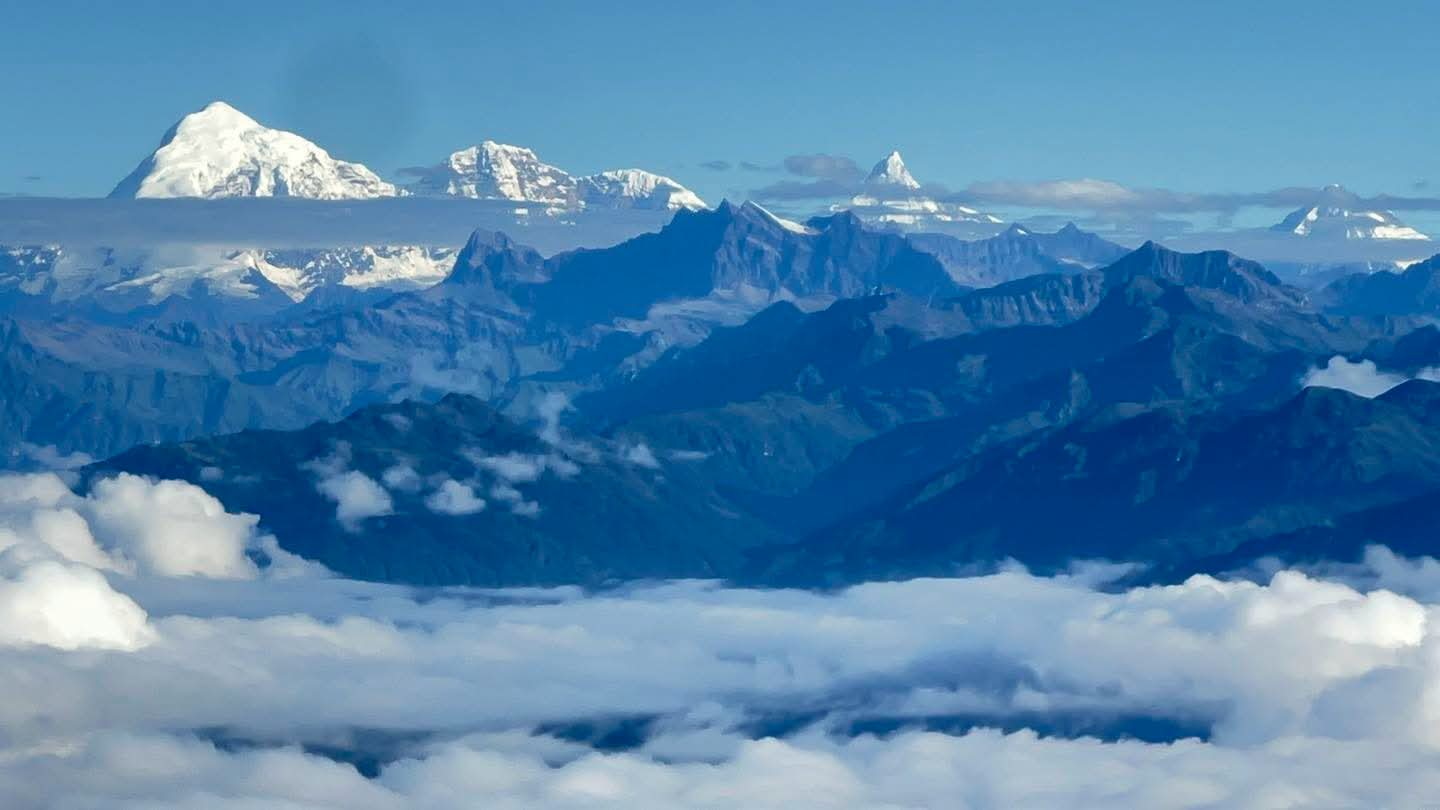
Nestled in the eastern Himalayas between China and India, Bhutan is a remarkable kingdom known for its breathtaking mountains, ancient monasteries, vibrant festivals and distinctive cultural identity. Often described as the Last Shangri-La, Bhutan has preserved many of its traditional customs while gradually embracing modern development.
Known locally as Druk Yul, the Land of the Thunder Dragon, Bhutan has a history shaped by Buddhist philosophy, regional traditions, political unification and the leadership of its monarchs. Its past remains visible in the architecture of its dzongs, the rituals of its monasteries and the festivals celebrated by communities throughout the country.
For travellers, exploring Bhutan’s history is an opportunity to discover more than beautiful landscapes. It offers a deeper understanding of the beliefs, traditions and people who have shaped this Himalayan kingdom.
The Origins of the Name Bhutan
The precise origin of the name Bhutan remains uncertain. One commonly cited theory connects it to the Sanskrit expression Bhotant, sometimes interpreted as the end or extremity of Tibet. Other linguistic explanations have also been proposed.
Bhutanese people traditionally refer to their country as Druk Yul, meaning the Land of the Thunder Dragon. The name is associated with the Drukpa Kagyu school of Himalayan Buddhism and has become a powerful expression of national identity.
The dragon appears on Bhutan’s national flag and represents the country’s distinctive heritage and sovereignty. The people are often referred to as Drukpas, reflecting this historic cultural and religious association.
Ancient History of Bhutan
Bhutan’s earliest history remains partly unknown. Archaeological discoveries suggest that people inhabited parts of the region thousands of years ago, although the precise dates and extent of early settlements remain uncertain.
The country’s mountains, fertile valleys and river systems shaped the development of early communities. Routes through the Himalayan valleys facilitated contact with neighbouring regions, including Tibet and the Indian subcontinent.
Before Buddhism became the dominant religious tradition, local communities followed indigenous spiritual practices associated with nature, ancestral beliefs and protective deities. Bon traditions and other local beliefs formed part of the wider religious landscape.
Much of Bhutan’s early history is reconstructed from archaeology, oral traditions, religious chronicles and later historical records. The arrival and spread of Buddhism provide some of the most important foundations for understanding Bhutan’s recorded religious history.
The Introduction of Buddhism to Bhutan
King Songtsen Gampo and the Seventh Century
Traditional accounts associate the early spread of Buddhism in Bhutan with the Tibetan king Songtsen Gampo, who ruled during the seventh century. Buddhist tradition credits him with establishing 108 temples across the Himalayan region.
Two important temples associated with this tradition are Kyichu Lhakhang in Paro and Jambay Lhakhang in Bumthang. Both remain significant religious destinations and offer visitors an opportunity to experience Bhutan’s enduring Buddhist heritage.
Guru Rinpoche and the Eighth Century
The arrival of Guru Rinpoche, also known as Padmasambhava, in the eighth century marked a major chapter in Bhutan’s Buddhist history. Revered as a great tantric Buddhist master, he is traditionally credited with strengthening Buddhist teachings throughout the Himalayan region.
Guru Rinpoche is closely associated with Taktsang Monastery, popularly known as Tiger’s Nest, which clings dramatically to a cliff above the Paro Valley. According to religious tradition, he meditated at this sacred site.
His legacy also includes the tradition of terma, or hidden religious treasures, believed to have been concealed for discovery by enlightened treasure revealers known as tertöns.
Today, Guru Rinpoche remains central to Bhutanese religious life, with his image appearing in monasteries, temples, homes and sacred paintings throughout the country.
The Drukpa Kagyu Lineage and Zhabdrung Ngawang Namgyal
During the thirteenth century, Phajo Drugom Zhigpo played an important role in establishing the Drukpa Kagyu Buddhist tradition in Bhutan. The lineage later became a major influence on the country’s religious and political development.
A defining moment came in 1616, when Zhabdrung Ngawang Namgyal arrived in Bhutan. Through religious authority, political leadership and military organisation, he gradually brought many regions under a common system of governance.
Zhabdrung established institutions that connected religious and civil administration. His system of governance, often described as the dual system, organised religious and temporal responsibilities through interconnected institutions.
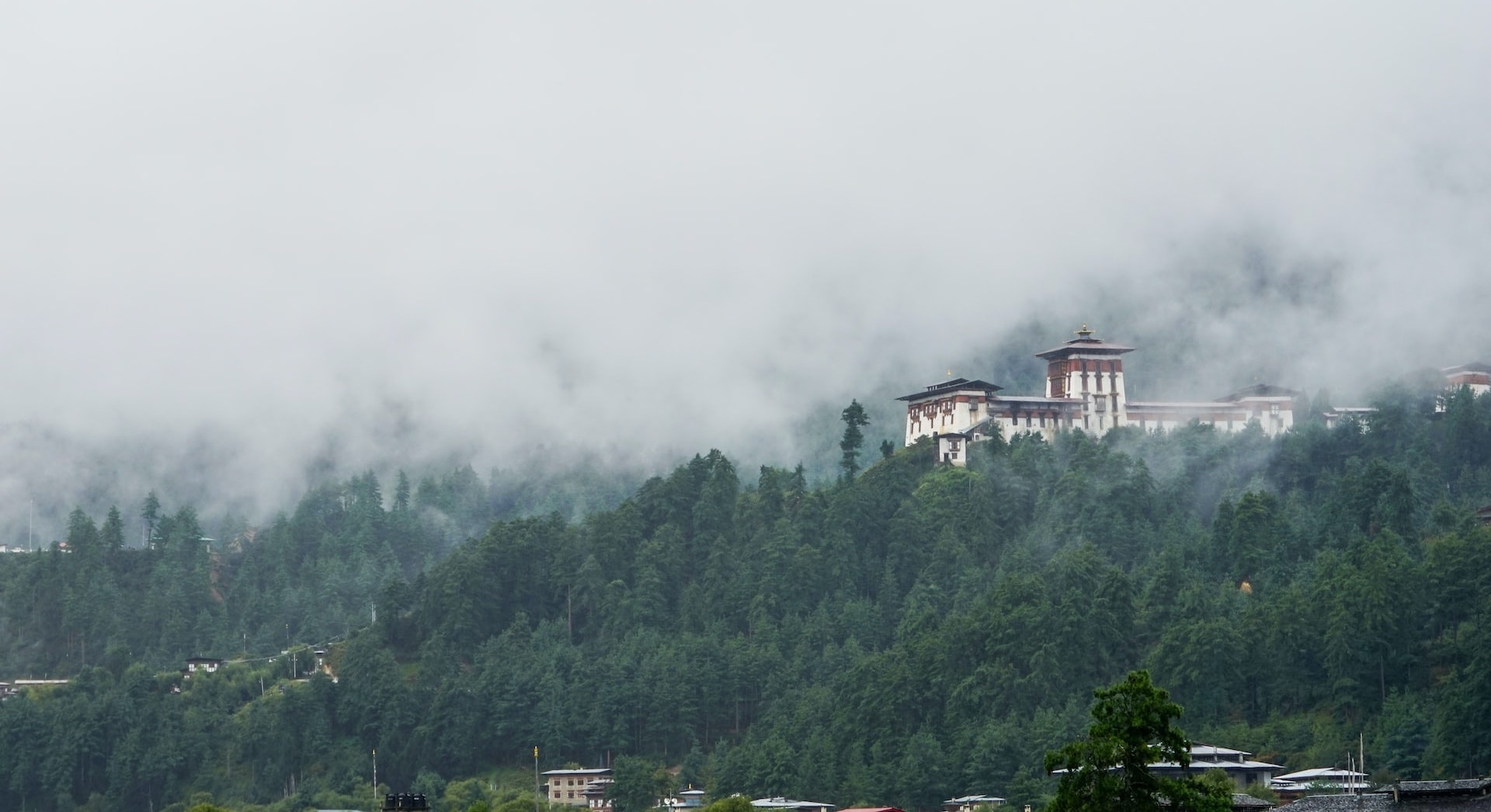
He also contributed to the development of laws and the construction of fortresses that served as centres of administration, religion and defence. These historic dzongs remain among Bhutan’s most recognisable landmarks.
Punakha Dzong: A Symbol of Bhutanese History
Located where the Pho Chhu and Mo Chhu rivers meet, Punakha Dzong is one of Bhutan’s most significant historical buildings. Its courtyards, ornate architecture and sacred halls reflect the close relationship between Buddhism and governance.
The dzong continues to play an important religious and ceremonial role. For visitors interested in Bhutan’s history, it is an essential stop on a cultural journey.
Bhutan Before the Monarchy
Following the death of Zhabdrung Ngawang Namgyal, the governing institutions he established continued under successive religious and administrative leaders. Over time, disputes over authority and succession contributed to political instability.
Regional leaders competed for influence, while the mountainous geography encouraged strong local identities. By the nineteenth century, the need for more stable central leadership had become increasingly apparent.
Trongsa, situated in central Bhutan, emerged as an important political centre because of its strategic position along routes linking eastern and western regions. Its dzong became closely associated with the leaders who eventually established the hereditary monarchy.
The Wangchuck Dynasty and the Establishment of the Monarchy
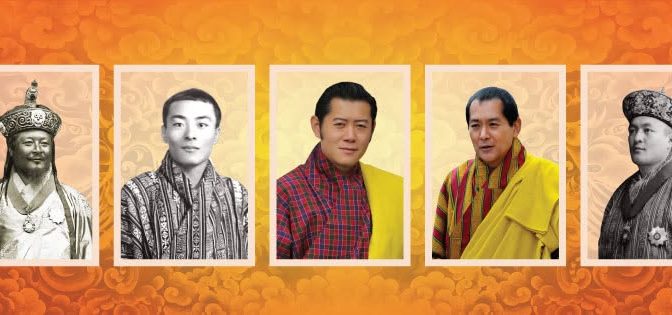
17 December 1907 is one of the most important dates in Bhutanese history. On this day, Ugyen Wangchuck, the Trongsa Penlop, was elected as the first hereditary King of Bhutan, establishing the Wangchuck dynasty.
Bhutan celebrates this historic event every year on National Day, commemorating the establishment of the monarchy and the country’s national development.
The First King: Ugyen Wangchuck
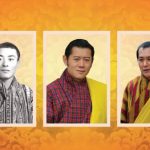
King Ugyen Wangchuck helped consolidate political authority and establish greater stability following a period of regional rivalry. His leadership laid the foundations for the modern Bhutanese state.
The Second King: Jigme Wangchuck
King Jigme Wangchuck succeeded his father in 1926. During his reign, Bhutan maintained a cautious approach to external relations while preserving its independence, cultural traditions and political institutions.
The Third King: Jigme Dorji Wangchuck
King Jigme Dorji Wangchuck became the third King in 1952 and is widely known as the Father of Modern Bhutan. His reign introduced important reforms and accelerated the development of modern national institutions.
In 1953, he established the National Assembly, introducing a representative element into Bhutan’s governance. His government also advanced development initiatives involving infrastructure, education, healthcare and public administration.
The Fourth King and Bhutan’s Transition Towards Democracy
King Jigme Singye Wangchuck became the fourth Druk Gyalpo in 1972. His reign emphasised national development, cultural preservation, environmental protection and the well-being of the Bhutanese people.
He became internationally associated with Gross National Happiness (GNH), a development philosophy that recognises well-being alongside economic progress. Its broader principles include good governance, environmental conservation, cultural preservation and sustainable socioeconomic development.
In 2001, the Fourth King initiated the process of drafting a written Constitution for Bhutan. This marked a significant step towards establishing a constitutional system and preparing the country for parliamentary democracy.
In 2006, he abdicated in favour of his son, Jigme Khesar Namgyel Wangchuck. The Constitution was adopted in 2008, establishing the framework for Bhutan’s democratic constitutional monarchy.
The Fifth King and Modern Bhutan
His Majesty King Jigme Khesar Namgyel Wangchuck was crowned the fifth Druk Gyalpo in 2008, the same year Bhutan adopted its Constitution and held its first parliamentary elections.
Bhutan’s constitutional system combines a hereditary monarchy with elected democratic institutions. The King serves as head of state, while the elected government exercises executive authority within the constitutional framework.
Today, Bhutan continues to develop its infrastructure, education, healthcare and economic opportunities while placing importance on cultural identity and environmental responsibility.
Traditional clothing, religious ceremonies, festivals, handicrafts and historic architecture remain visible in everyday life, giving visitors a distinctive view of a country balancing heritage with change.
Historical Places to Visit in Bhutan
1. Paro Taktsang — Tiger’s Nest Monastery
Perched on a cliff above the Paro Valley, Tiger’s Nest is one of Bhutan’s most famous sacred sites. Its religious significance, mountain scenery and challenging uphill walk make it a memorable highlight for many visitors.
2. Kyichu Lhakhang
Kyichu Lhakhang is an important historic temple traditionally associated with the early spread of Buddhism in Bhutan. It remains an active place of worship and a valuable stop for travellers exploring Paro’s cultural heritage.
3. Jambay Lhakhang
Located in Bumthang, Jambay Lhakhang is associated with Bhutan’s early Buddhist traditions. Its annual Jambay Lhakhang Drup features religious ceremonies and traditional dances.
4. Punakha Dzong
This remarkable fortress stands at the confluence of two rivers and reflects the historical relationship between religious institutions and government. Its architecture and ceremonial importance make it a major cultural attraction.
5. Trongsa Dzong
Trongsa Dzong occupies a commanding position in central Bhutan and played an important role in the rise of the Wangchuck dynasty. It is especially significant for visitors interested in Bhutan’s royal history.
6. Bumthang Valley
Bumthang is renowned for its temples, monasteries and sacred landscapes. Its historic sites and traditional communities offer a deeper introduction to Bhutan’s spiritual heritage.
Bhutanese Festivals: Living Traditions and History
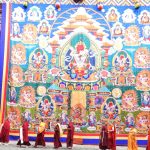
Bhutan’s festivals, commonly known as tshechus, are among the most vivid expressions of its cultural and religious heritage. Held at dzongs and monasteries, these gatherings often commemorate Guru Rinpoche and important events in Buddhist history.
Monks and lay performers wear elaborate costumes and masks to perform sacred dances known as chham. The dances communicate religious teachings and symbolic stories, while festivals also bring communities together for blessings and celebration.
Important events include Paro Tshechu, Thimphu Tshechu and Jambay Lhakhang Drup in Bumthang. Each festival has its own traditions and atmosphere.
Travellers should remember that these are meaningful religious occasions, not simply performances for visitors. Respectful behaviour and appropriate clothing help preserve the sanctity of these celebrations.
Bhutan’s Cultural Heritage and Preservation
Bhutan’s history remains visible through its architecture, traditional dress, religious practices and community customs. Men commonly wear the gho, while women wear the kira. Dzongs, monasteries, temples and traditional homes reflect architectural skills passed down through generations.
Local crafts such as weaving, painting, woodcarving and traditional construction continue to contribute to the country’s cultural identity. Buddhist values also influence ceremonies, festivals and community life.
Environmental conservation is another important part of Bhutan’s national identity. Its forests, rivers, mountains and wildlife form an integral part of the country’s natural and cultural heritage.
Visitors can contribute to responsible tourism by following local guidance at religious sites, asking permission before photographing people and treating sacred ceremonies with respect.
Experience Bhutan Through a Historical Journey
A historical tour of Bhutan can combine ancient temples, royal landmarks, local villages and spectacular Himalayan landscapes.
- Paro: Discover ancient temples, traditional architecture and Tiger’s Nest Monastery.
- Thimphu: Explore national landmarks, handicrafts, religious sites and contemporary Bhutanese life.
- Punakha: Visit the historic dzong and learn about Bhutan’s religious and political heritage.
- Trongsa: Discover the fortress associated with the rise of the Wangchuck dynasty.
- Bumthang: Explore sacred temples, traditional communities and important Buddhist sites.
Travellers can also combine cultural sightseeing with trekking, cycling, wildlife experiences, wellness activities and spiritual pilgrimages for a more personalised Bhutan holiday.
Frequently Asked Questions About Bhutan’s History
When does Bhutan’s recorded history begin?
Bhutan’s early history is partly uncertain, but the arrival of Buddhism and the activities of important Buddhist teachers provide key foundations for its recorded religious history.
Why is Bhutan called the Land of the Thunder Dragon?
Bhutan is known in Dzongkha as Druk Yul, meaning the Land of the Thunder Dragon. The dragon is a national symbol associated with Bhutanese identity and heritage.
Who unified Bhutan?
Zhabdrung Ngawang Namgyal played a decisive role in unifying Bhutan during the seventeenth century and establishing institutions that shaped its religious and political identity.
When was Bhutan’s monarchy established?
The hereditary monarchy was established on 17 December 1907, when Ugyen Wangchuck became Bhutan’s first hereditary King.
Who is known as the Father of Modern Bhutan?
The Third King, Jigme Dorji Wangchuck, is widely known as the Father of Modern Bhutan because of his major reforms and development of modern national institutions.
When did Bhutan become a democratic constitutional monarchy?
Bhutan adopted its Constitution and held its first parliamentary elections in 2008, establishing the modern democratic constitutional monarchy.
Which historical places should I visit in Bhutan?
Important places include Tiger’s Nest Monastery, Kyichu Lhakhang, Jambay Lhakhang, Punakha Dzong, Trongsa Dzong and the historic temples of Bumthang.
Discover Bhutan’s History with Ling Travel Bhutan
Bhutan’s story is one of ancient settlement, spiritual transformation, political unification, royal leadership and constitutional change. From sacred temples and historic dzongs to vibrant festivals and traditional villages, the country’s heritage continues to shape everyday life.
At Ling Travel Bhutan, we help visitors experience this heritage through thoughtfully planned cultural tours, spiritual pilgrimages, festival journeys, trekking adventures and customised holidays.
Whether you want to explore Tiger’s Nest, discover the royal history of Trongsa, attend a traditional tshechu or experience the peaceful valleys of Bumthang, our local team can help you plan a memorable journey.
Discover Bhutan beyond ordinary sightseeing. Explore its history, meet its people and experience the Land of the Thunder Dragon.