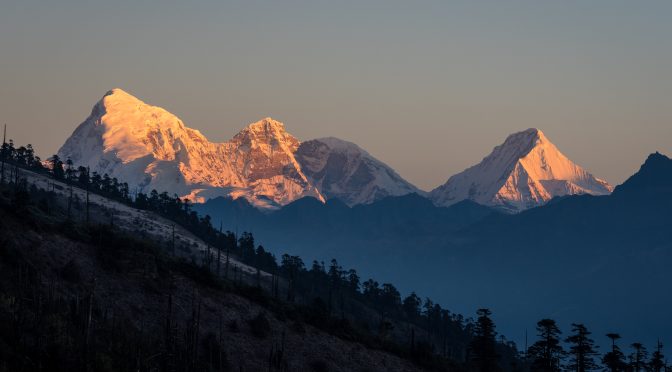
A Spiritual Pilgrimage Through the Heart of Bhutan
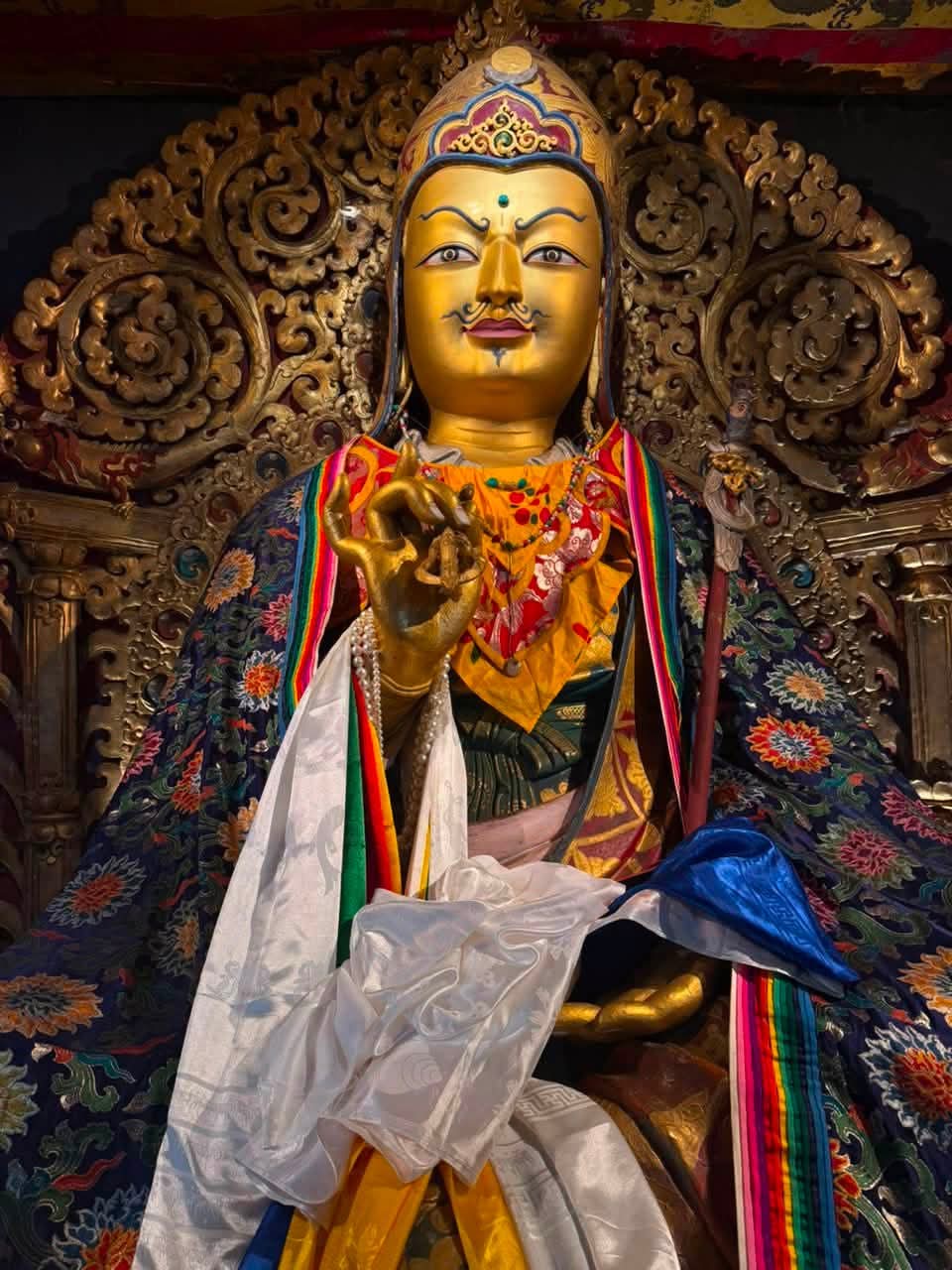
In the heart of the Himalayas, where the crisp mountain air carries the echo of ancient mantras and thesnow-capped peaks seem to touch the heavens, the spirit of Guru Padmasambhava—affectionately known as Guru Rinpoche, the “Second Buddha”—permeates every valley, monastery, and prayer flag. Hislife, a tapestry of miracles, divine emanations, and boundless compassion, is intricately woven into thecultural and spiritual fabric of Bhutan. For travelers seeking more than just breathtaking landscapes,
transformation, and the triumph of wisdom over ignorance.Guru Rinpoche was no ordinary master. An emanation of both Buddha Amitābha and the peerless
Śākyamuni Buddha, he appeared in this world with a singular purpose: to tame beings—both
human and spirit—that were otherwise untamable. His life transcends the boundaries of ordinary
comprehension, spanning realms from the Dharmakāya (the realm of absolute truth) to the
Nirmāṇakāya (the emanation body that appears to guide sentient beings). In the Dharmakāya realm
of Luminous Vajra Essence, he has been naturally enlightened within primordial purity since the very
beginning of time, renowned as the Unchanging Light.
of the five wisdom families of Buddha Immense Ocean, possessing the five certainties. His external
manifestation is perceived by all the bodhisattvas on the ten bhūmis in myriad forms within the buddhafields of
the five families. Thus, he is known as Lotus Who Holds All—the cloudbanks of the Guru’s wisdom display.
This blog post invites you to embark on a spiritual journey through Bhutan, following the footsteps of
Guru Rinpoche. From his miraculous birth to his profound teachings and the sacred sites he blessed,
we explore how his legacy continues to illuminate the path for countless seekers.
The Legend of Guru Padmasambhava: The Lotus-Born Master
The life of Guru Padmasambhava is a testament to the inexhaustible compassion of the Buddhas.
His story begins not in an ordinary way, but through a miracle that defies the laws of nature. According to
the terma (hidden treasure) teachings, in the oceans surrounding the western land of
Uḍḍiyāna, there lay an island close to the land of the rākṣasas. On this island, the blessings of all
the Buddhas took shape in the form of a multi-colored lotus flower.
Moved by compassion for the suffering of sentient beings, Buddha Amitābha, the Lord of
Sukhāvatī (the Pure Land of Bliss), sent from his heart a golden vajra marked with the
syllable hrīḥ. This sacred symbol entered the bud of the lotus flower and
miraculously transformed into an eight-year-old child, endowed with all the major and minor
marks of perfection, holding a vajra in his right hand and a lotus in his left. This child was none other
than Padmākara, the Lotus-Born.
his wisdom already as vast as the ocean.
From Prince to Exile: The Early Life of Padmākara
Meanwhile, the King of Uḍḍiyāna, Indrabhūti, found himself without an heir to the throne.
Through his great acts of making offerings to the Three Jewels and giving alms to the poor and needy,
the king had exhausted his treasury. In a bid to restore his kingdom’s fortune, he set out on a voyage
upon the great lake to find a wish-fulfilling jewel.
Upon returning with the jewel, both his minister Triguṇadhara and the king himself encountered
the amazing child on the island. Recognizing him as the answer to his prayers, King Indrabhūti took the
child back to the royal palace. There, he was given the names Padmākara (Lotus-Born) and
Tsokyé Dorjé (Lake-Born Vajra). The prince was seated on a throne of precious jewels, and the
citizens were delighted as a rain of foods, clothing, and precious objects sprang forth from the
magic of the wish-fulfilling jewel.
As the young prince grew up, he brought countless beings to spiritual maturation through his youthful
play and games. He married the ḍākinī Prabhāvatī and ruled the kingdom of Uḍḍiyāna according
to the Dharma, becoming known as King Tortokchen (The Turbaned King). Yet, his true calling
lay not in royalty but in the service of all beings.
Seeing that as a ruler he would be unable to bring about spiritual benefit on a vast scale, Padmākara
begged his father for permission to abdicate. When refused, he devised a plan: during a royal dance,
he pretended that his trident slipped from his hand, striking and liberating the son of a demonic
minister. As a consequence of breaking the law against killing children, Padmasambhava was promptly
banished to the charnel grounds.
Thus began his journey to the sacred charnel grounds of Śītavana (Cool Grove),
Nandanavana (Joyful Grove), and Sosadvīpa (Sosa Land), where he practiced
yogic disciplines. There, he received empowerments and blessings from the ḍākinīs
Mārajīta (Tamer of Māra) and Śāntarakṣitā (Sustainer of Bliss), and brought
the ḍākinīs of the charnel grounds under his sovereign command. He became known as
Śāntarakṣita (Preserver of Peace).
The Eight Supreme Manifestations
Guru Rinpoche’s activities are said to manifest in eight supreme forms, each representing
a different aspect of his enlightened activity to benefit beings. These manifestations are:
- Guru Tsokyé Dorjé (Lake-Born Vajra) – His miraculous birth from the lotus.
- Guru Shakya Sengé (Lion of the Śākyas) – His ordination as a monk under Prabhahasti.
- Guru Nyima Özer (Rays of the Sun) – His radiant teachings and display of miracles at Bodh Gaya’s Vajra Throne.
- Guru Loden Choksé (Wise Seeker of the Sublime) – His mastery of the Dharma and attainment of the first vidyādhara level.
- Guru Pema Gyalpo (Lotus King) – His royal presence as a teacher in Uḍḍiyāna and Zahor.
- Guru Sengé Dradrok (Lion’s Roar) – His victory over heretical teachers at Bodh Gaya.
- Guru Dorjé Drolö (Wild Wrathful Vajra) – His wrathful form binding spirits and subduing obstacles.
- Guru Padmasambhava – The culmination of all his manifestations, the essence of his enlightened activity.
His activities are indeed a topic that lies far beyond the reach of the ordinary intellect.”
Sacred Sites in Bhutan: Walking in Guru Rinpoche’s Footsteps
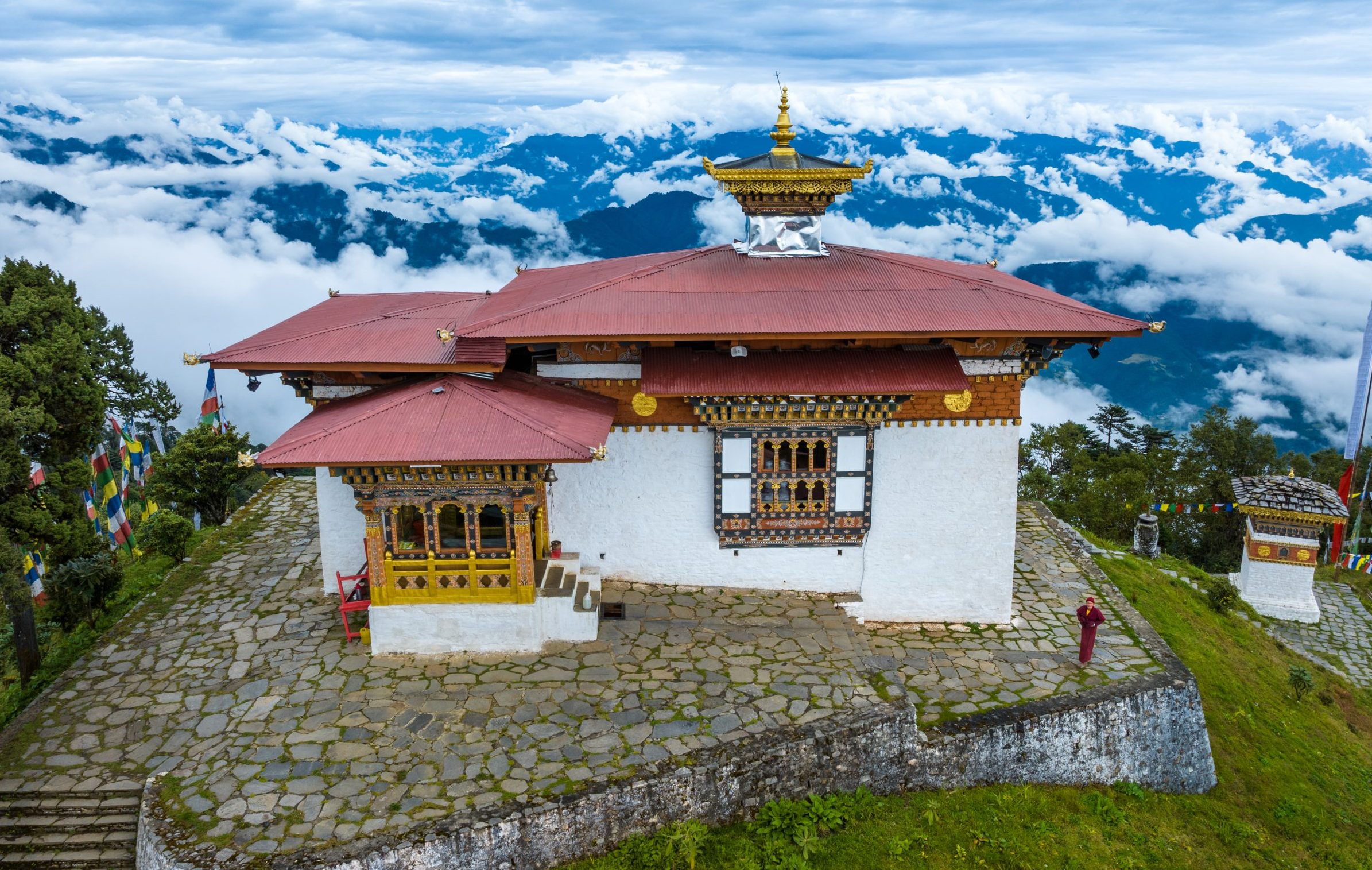
Bhutan, often referred to as the Last Shangri-La, is a land deeply blessed by Guru Rinpoche’s
presence. From the towering cliffs of Paro Taktsang to the serene valleys of
Bumthang, every corner of this Himalayan kingdom holds a piece of his divine legacy.
Paro Taktsang (Tiger’s Nest Monastery)
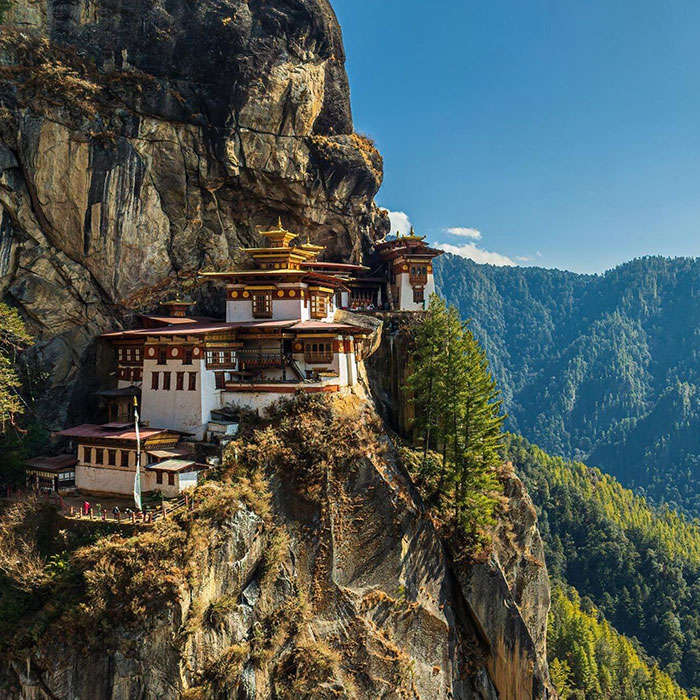
Perched precariously on a cliff 3,120 meters above sea level, Taktsang Monastery is
Bhutan’s most iconic pilgrimage site. According to legend, Guru Rinpoche arrived here on the
back of a tigress—a manifestation of his consort, Khandro Yeshé Tsogyal—
and meditated for three months in the Tiger’s Nest Cave.
The monastery, first built in 1692, clings to the cliffside like a jewel, offering
breathtaking views of the Paro Valley. Paro, Bhutan
2-3 hour hike
Kurjey Lhakhang (Temple of the Body Imprint)
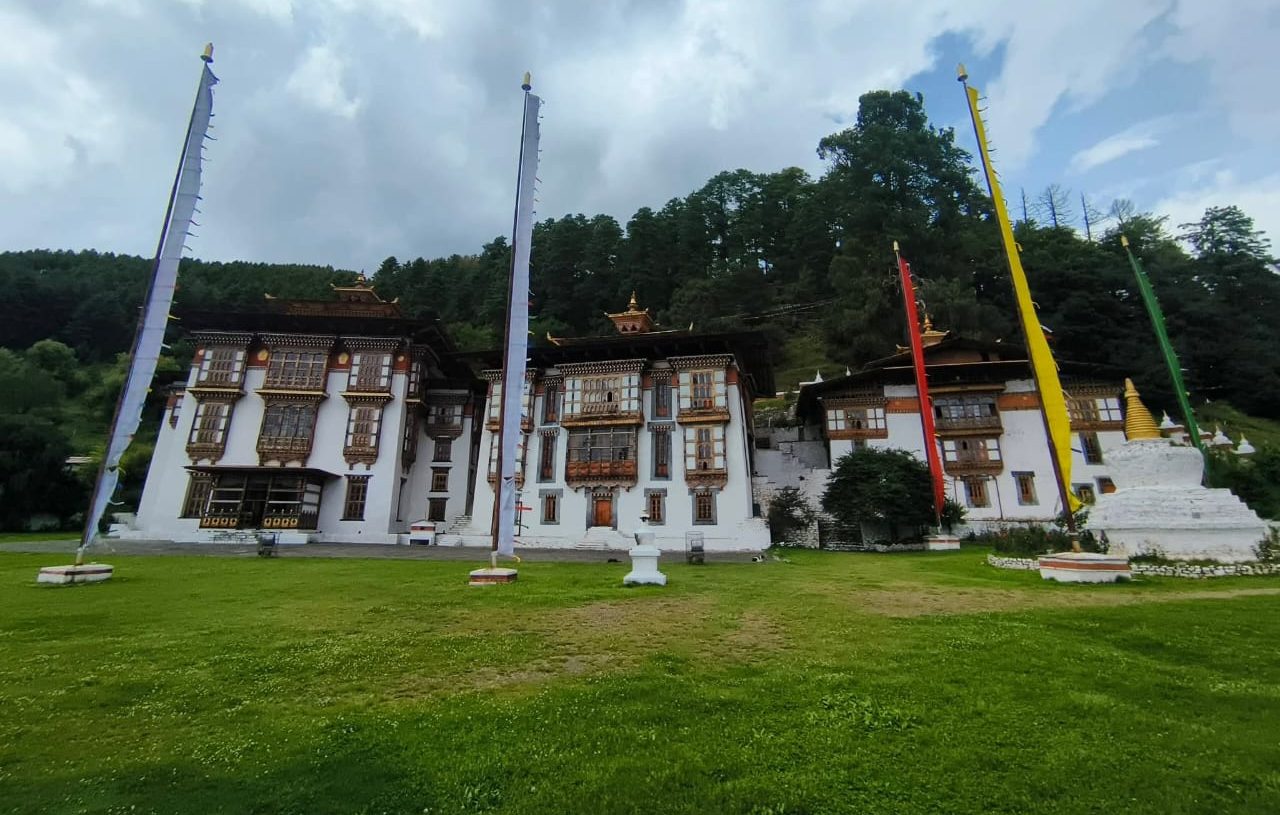
Located in the sacred Choekhor Valley of Bumthang, Kurjey Lhakhang
(“Temple of the Imprint of the Body”) marks the spot where Guru Rinpoche left his
body imprint on a cliff while subduing a local deity.
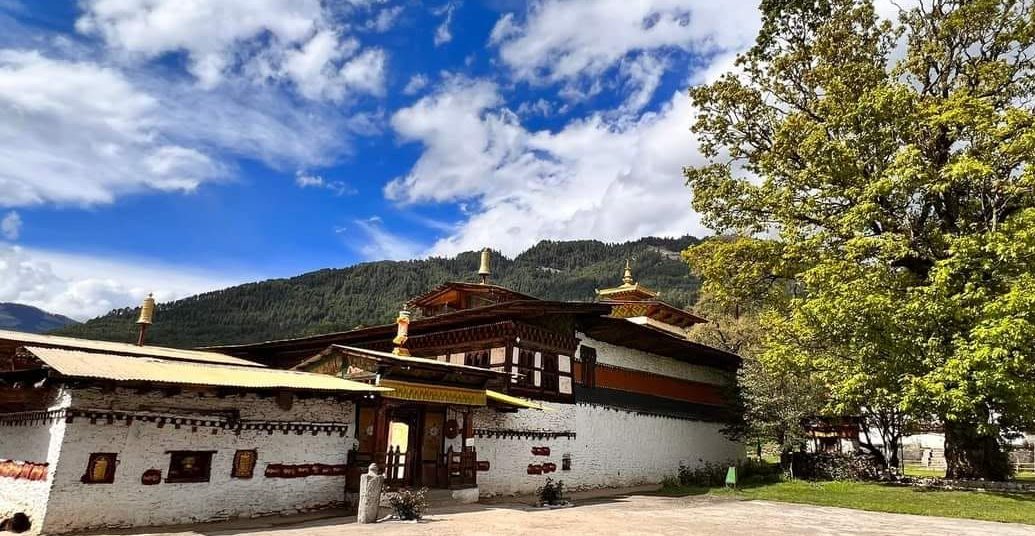
Tamshing Lhakhang (Temple of the Good Message)
Founded in 1501 by Pema Lingpa, a renowned tertön (treasure revealer),
Tamshing Lhakhang is one of Bhutan’s oldest and most sacred monasteries.
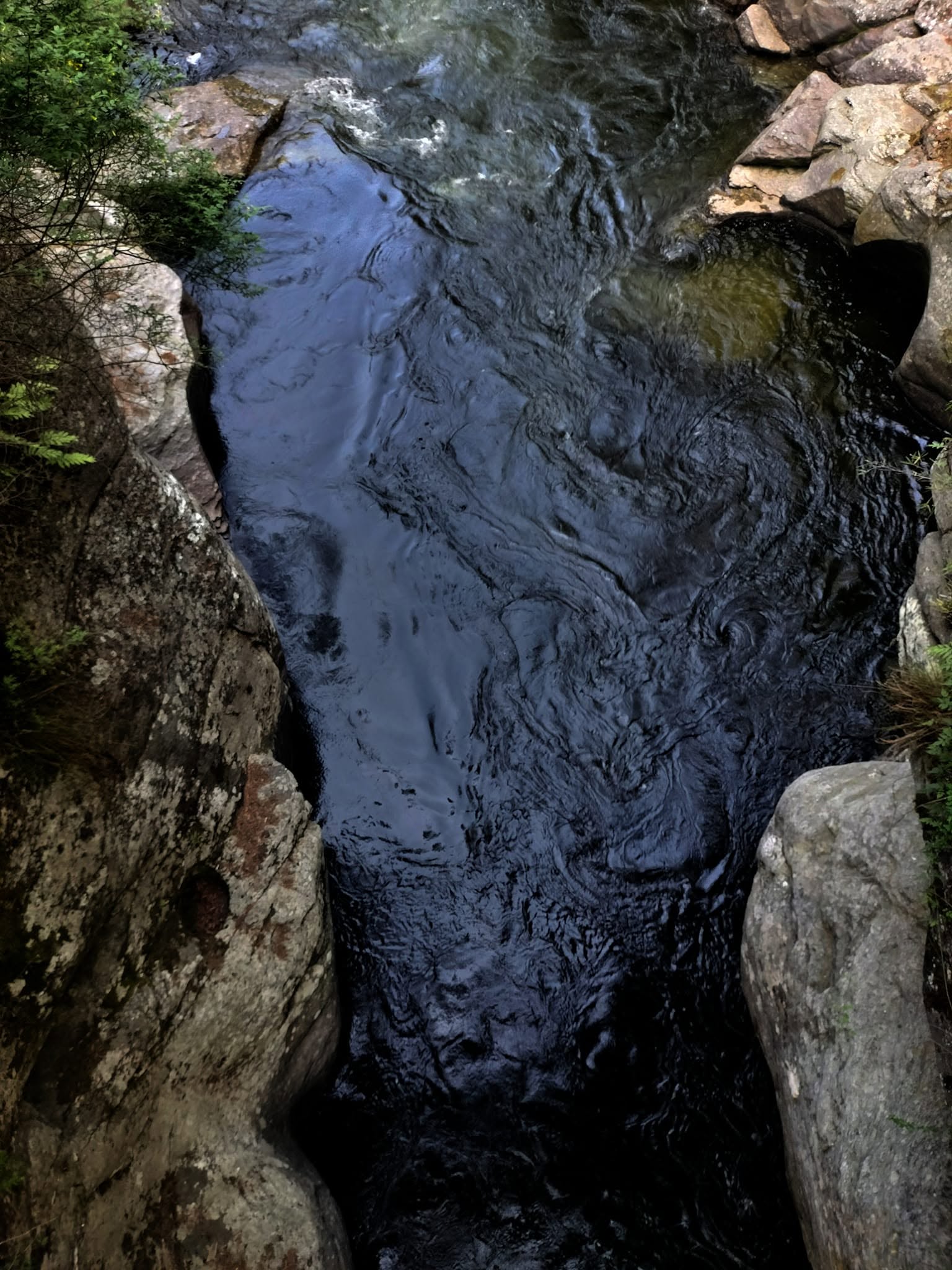
Description
Membartsho (The Burning Lake)
Membartsho, or the Burning Lake, is one of Bhutan’s most sacred pilgrimage
sites. It is here that the great tertön Pema Lingpa discovered sacred treasures hidden by Guru Rinpoche.
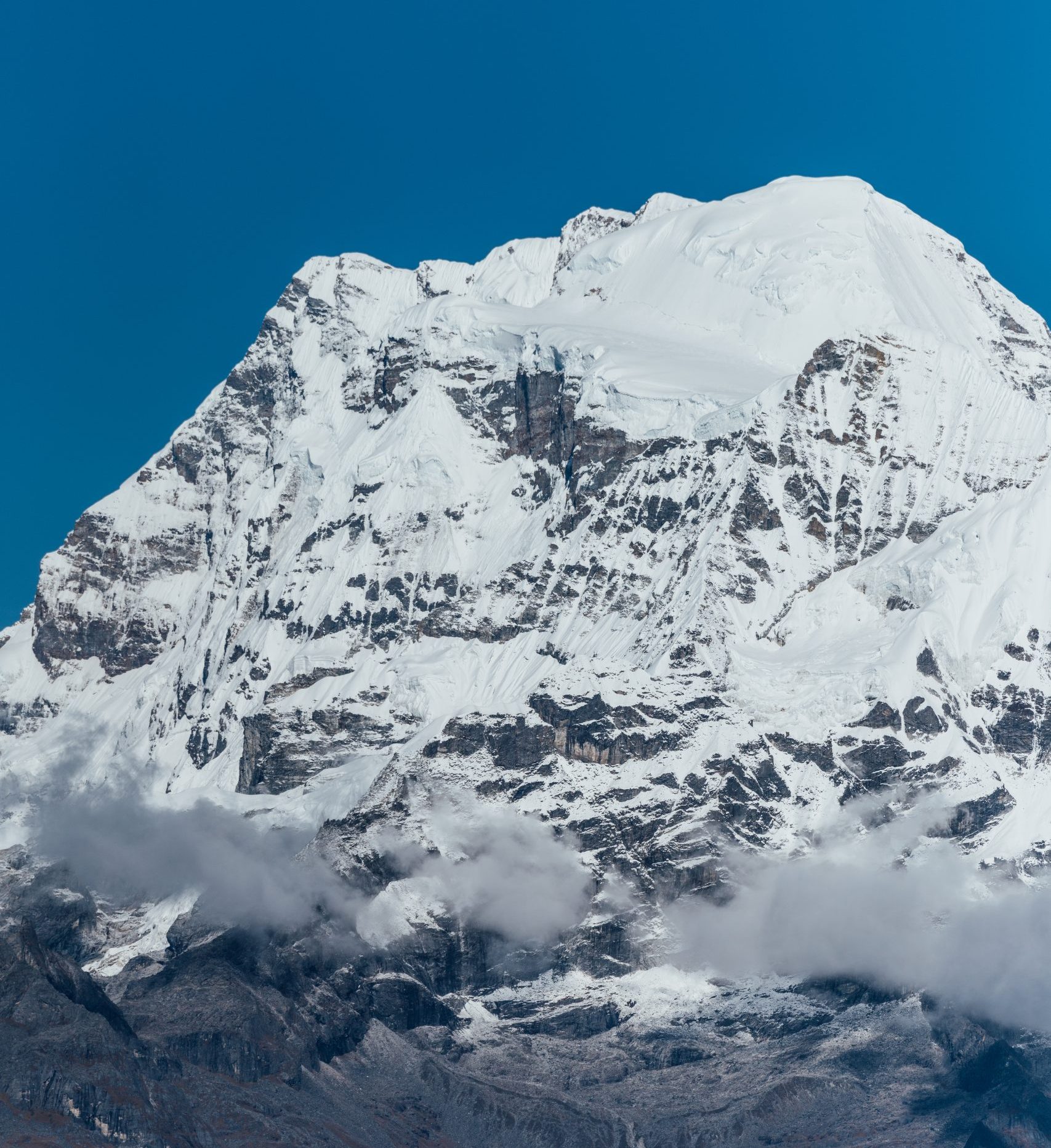
Mount Hepori (Bumthang)
This sacred mountain in Bumthang is where Guru Rinpoche subdued the local deities and
spirits that were obstructing the spread of Buddhism in Bhutan.
Pilgrimage Tips for Travelers
Embarking on a spiritual pilgrimage through Bhutan is a transformative experience. To make the most
of your journey, here are some essential tips to ensure a meaningful and respectful visit.
Best Time to Visit
Bhutan’s Tsechus (annual festivals) are the best times to experience the country’s
spiritual culture. Key festivals include:
- Paro Tsechu (March/April) – Celebrated at Paro Dzong, featuring a grand Thongdrol display.
- Thimphu Tsechu (September/October) – The largest festival in Bhutan.
- Bumthang Tsechu (October/November) – A colorful celebration in the spiritual heart of Bhutan.
Cultural Etiquette
Bhutan is a deeply spiritual country. Respect local customs:
- Dress modestly when visiting monasteries and temples.
- Circumambulate stupas and temples clockwise.
- Remove your hat and shoes before entering sacred spaces.
- Avoid pointing with your feet or touching religious objects.
Guided vs. Solo Travel
A guided pilgrimage tour offers invaluable insights into the spiritual significance of each site.
Ling Travel Bhutan offers customized spiritual tours tailored to your interests.
What to Pack
Pack smartly for your pilgrimage:
- Comfortable Hiking Shoes – Essential for sites like Taktsang Monastery.
- Layered Clothing – Bhutan’s weather can be unpredictable.
- Modest Clothing – Long skirts, pants, and shawls for temple visits.
- Sun Protection – Hat, sunglasses, and sunscreen.
Why Bhutan? The Land of the Thunder Dragon
Bhutan is not just a destination—it is a living embodiment of Guru Rinpoche’s teachings.
His influence is palpable in every aspect of Bhutanese life.
The Legacy of Termas (Hidden Treasures)
One of the most fascinating aspects of Guru Rinpoche’s activity in Bhutan is his concealment of
countless termas (hidden treasures). These treasures—sacred texts, relics, and teachings—
were hidden to be revealed by tertöns (treasure revealers) at the right time.
The Concept of Beyul (Hidden Valleys)
Bhutan is believed to be one of the Beyuls, or hidden valleys, blessed by Guru Rinpoche
as refuges for practitioners during times of strife.
Guru Rinpoche’s Enduring Presence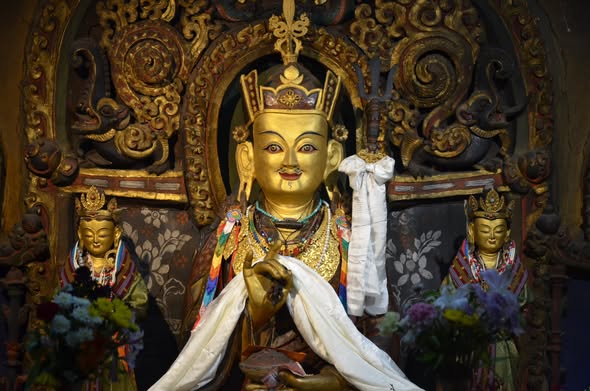
Guru Rinpoche’s connection to Bhutan is not confined to the past. His presence is said to be
eternally active, with emanations and blessings continuing to benefit beings.
land is to walk in the footsteps of enlightenment.”
The Journey to Bhutan: What to Expect
Visa and Entry Requirements
All tourists must book their trip through a licensed Bhutanese tour operator like Ling Travel Bhutan.
The daily Sustainable Development Fee (SDF) of $100 per night covers accommodation, meals,
transportation, and a licensed guide.
Getting There
The most common entry point to Bhutan is Paro International Airport. Airlines such as
Druk Air and Bhutan Airlines operate flights from Thailand, India, Nepal,
Bangladesh, and Singapore.
Accommodation
Bhutan offers a range of accommodations, from luxury resorts to cozy guesthouses.
Food and Cuisine
Bhutanese cuisine is a delightful blend of flavors, with dishes like ema datshi (chili
and cheese), khewang (buckwheat pancakes), and red rice.
Begin Your Spiritual Journey with Ling Travel Bhutan
Guru Rinpoche’s life and teachings remind us that enlightenment is not a distant goal but a
living presence in every moment. Bhutan offers a rare opportunity to connect with this wisdom.
At Ling Travel Bhutan, we specialize in crafting meaningful, transformative journeys
that honor the sacred legacy of Guru Rinpoche.
Let us guide you through the land of the Thunder Dragon, where every step is a prayer, every
mountain a temple, and every moment an opportunity to awaken.
Ready to Walk in the Footsteps of Guru Rinpoche?
Book your customized spiritual pilgrimage tour with Ling Travel Bhutan today.
“May the blessings of Guru Rinpoche guide your path, and may every step you take in Bhutan bring you closer to enlightenment.”
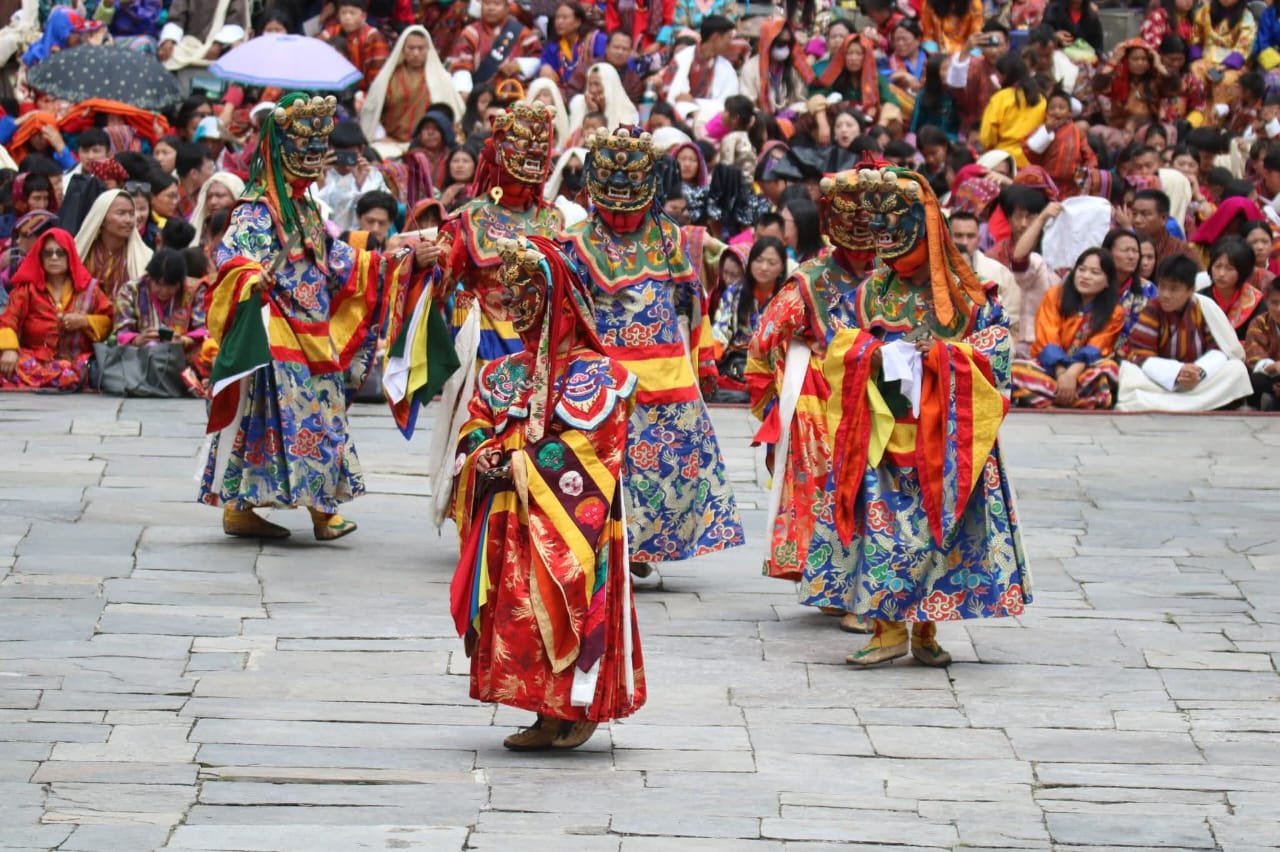
The Magic of Bhutan’s Tsechus: A Guide to Festivals